|
||||||
|
||||||
|
|
|||||
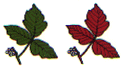
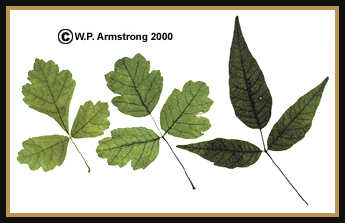
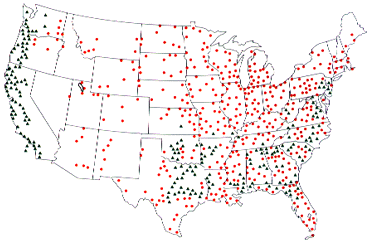


Poison oak, ivy, sumac, and other members of the Rhus family grow in all portions of the North American continent (except Nevada, Alaska, and Hawaii) at elevations below 4,000 feet with a rainfall above 8 inches per year. These plants are a significant cause of worker's compensation claims in the United States. They are also the source of considerable distress to outdoor recreationists and hobbyists.
QUESTIONS AND ANSWERS
1. What can I do to relieve the itch?
There is no cure for the rash once it begins, only relief of the symptoms. Avoid further contact with the plant oils if possible. Removal of any remaining oils in the early stages of the rash (i.e., first 24-48 hours) can help reduce its severity and duration.
Minor itching, pain, oozing, and swelling can be relieved with over-the-counter anti-itch treatments that contain zinc acetate, diphenhydramineHCI, menthol zinc oxide, or hydrocortisone. In sever cases a physician can prescribe antihistamine creams, tablets, or shots.
2. Do the blisters cause the rash to spread?
No. The blisters are the body's natural allergic reaction to poisonous plants. If the blisters break and ooze, the fluid does not contain the oils that cause spreading. Oils from the original contact with the plant that have not bonded with skin cells continue spreading (unless removed) for the first 1 or 2 days. If new areas of rash appear after 3 days, you are getting re-exposed to the plant oils, most likely from contaminated clothing, tools, or even your cat or dog.
|
3. How long will the rash last? Mild cases can last 5-12 days. More severe cases can last up to 30 days or longer, due to re-exposure. 4. Can I get the rash from someone else? Generally speaking, no. Once the rash appears (i.e. within 1-3 days), the original oil has all bonded to the victim's skin, so it can't be spread to others. 5. How long do the urushiol oils last? OILS DO NOT EVAPORATE and can remain active for a year or longer after being picked up on tools, clothing, animal fur, etc. |
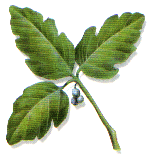
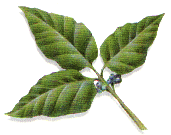 POISON
IVY (Rhus toxicodendron L.)
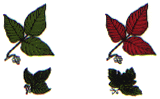
POISON
IVY (Rhus toxicodendron L.)6. Should I break the blisters?
Never break the blisters! An open blister can easily become infected and lead to blood poisoning. If the blisters break, cover loosely with a sterile bandage.
7. I've never gotten the rash before. Can I get it now?
Yes, you can begin getting the rash at any time during your life. Three out of four people are sensitive to poison oak and ivy. Sensitivity is just a matter of being exposed enough times until the body becomes allergic to the poison oil.
8. Should I wrap or cover the rash with bandages?
Air is helpful to healing any wound. If you cover the rash with a sterile bandage, cover lossely to allow healing oxygen to reach the surface of the skin. It is important to keep the rash very clean; changing the sterile bandage frequently reduces the risk of infection. Seek medical attention if rash becomes red, feverish or shows other signs of infection.
| 9. Are dead plants safe to touch? No. The poison oils remain toxic and do not evaporate. All parts of the living or dead poison plants, including the roots, contain the urushiol oils. Be especially careful of dead vines on firewood and leafless vines in the winter. 10. Do I need to clean urushiol oil from clothing and tools? Yes. The poison oil will remain active on these articles and can cause a rash months, or even years later. Removal of the oil with a thorough cleansing is important to avoid contaminating unsuspecting victims in the future. 11. Can I get the rash from my pets? Yes. Since the animals' fur protects their skin from the poison oil, they won't get a rash. However, the oil will remain on their fur and will contaminate you when you touch them. Removal of the poison oil from your pet with a thorough, effective cleanser will help avoid contaminating you and your family with an unwanted and unsuspected rash. |
|
12. Is it possible to get a rash by breathing the smoke of burning poison plants?
Yes. The urushiols are carried in the smoke from burning leaves or brush. If you think you have inhaled the oils, see your physician immediately; this can be a very serious condition. In several states it is illegal to burn poison plants. NEVER BURN IT! Avoid breathing the smoke.
13. Does bleach remove the urushiol oils or help heal the rash?
No. Bleach may appear to be a quick fix to poison plant rash. However, bleach removes the top layer(s) of your skin. Using it can irritate your skin and in the process weaken it so that the rash may become worse, or it could lead to an infection. Your skin may then become more sensitive to getting the rash in the future.
|
Visitors
Count is per person no matter how many pages are visited!
Hits
Count is for ALL the hits each visitor makes!

prom dresses 2007 + size