Poison Oak...
POISON OAK... if you have the itch... don't scratch it!
Each year thousands of adults and children are treated for the itchy side effects of Poison Oak. Because they haven't learned to identify it in the wild, people unknowingly walk through it, play in it, and yes... even eat it! Some people are immune to it or only contract mild rashes when exposed. Most people, however, aren't so lucky. Upon contact they develop a spreading, very itchy and sometimes painful rash.
A natural oil on the stems and leaves of Poison Oak is the culprit. The oil adheres to skin and clothing and can spread by touch. Whatever you do, if you think you have been exposed, DO NOT TOUCH YOUR EYES, or anything else for that matter. As quickly as you can, take a luke warm shower (NOT HOT) and wash the affected area thoroughly. If a rash develops, a visit to the doctor or the local pharmacy may be in order. NOTE: smoke from burning Poison Oak is a special problem and can cause severe reactions in people, internally as well as externally.
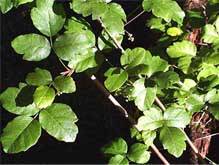
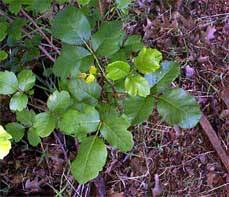
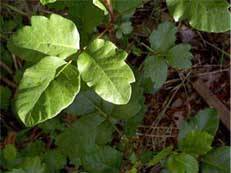
Everyone, whether they react to Poison Oak or not, should learn to recognize it and then look carefully for it whenever they go outside. It is always best to avoid exposure whenever possible. If you are going to spend any time out in the woods or other wild places at elevations between sea level and 5000' you might want to memorize some things about this plant: Three Parted Leaves... The leaves are "3 parted." That means that each leaf has the appearance of 3 leaves. Depending on the time of year, the leaves can be almost any color... yellowish, deep green, red, orange or reddish black. The oil in the plant causes the leaves to be very shiny.
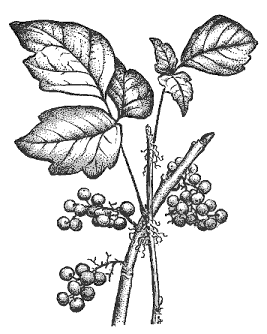
What to look for... Three Parted Leaves... The leaves are "3 parted." That means that each leaf has the appearance of 3 leaves. Depending on the time of year, the leaves can be almost any color... yellowish, deep green, red, orange or reddish black. The oil in the plant causes the leaves to be very shiny.
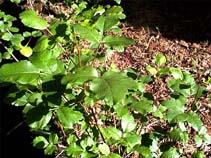
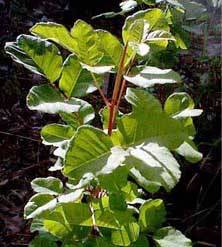
How it grows and what the stems look like... In winter and early spring look for clumps of light brown or grayish stems, usually to 5' tall with a strong upright habit. Sometimes, when it grows next to a tree and the exposure is favorable, it can climb to 20' or more by using the tree for support. Older plants tend to branch but clumps of younger plants are usually made up of singular stems. At lower elevations, on dry slopes exposed to strong sun, the plants tend to spread out a bit and take on a more unkempt appearance... often rough and gray with splotches of light colored lichens all over.
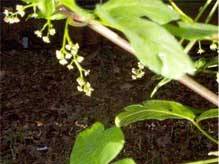
Flowers and berries... Poison Oak bears small, hanging, clusters of yellowish-green flowers in the spring that turn to small, greenish-white, berries in late summer. The berries hang on through early winter with only the stems remaining by spring. If you are uncertain that the plant you are looking at, or are about to grab, is Poison Oak... look closely for little hanging stems with white berries, or the remnants of berries (they can appear like little bunches of tiny dried up grapes!)
Native American uses... Various tribes used Poison Oak for a variety of things. They fashioned baskets from the roots and stems. They ground the roots for a coarse bread meal. Parts of the plant were boiled down to produce a black dye. Some tribes even used a potent concoction from the plant as a wart remover!
http://www.shastalake.com/
http://www.shastalake.com/
http://www.shastalake.com/images/
http://www.shastalake.com/
http://www.shastalake.com/
http://www.shastalake.com/
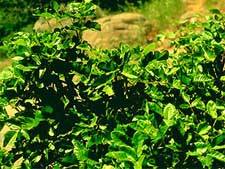
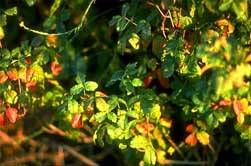
Spring growth
Visitors
Count is per person no matter how many pages are visited!
Hits
Count is for ALL the hits each visitor makes!

prom dresses 2007 + size