The most toxic plant parts are listed. Note that some plant parts are non-toxic, while other parts on the same plant are toxic. Those plants listed with an * are considered potentially fatal. Also note that many plants within a certain family may be toxic, so if you know that one plant in a family is poisonous, be especially cautious with other plants in that same family.
 * Autumn Crocus,
Colchicum autumnalle, bulb; Angel's Trumpet,
Datura (some species), seeds, leaves;
* Autumn Crocus,
Colchicum autumnalle, bulb; Angel's Trumpet,
Datura (some species), seeds, leaves;
*
Bleeding Heart, Dicentra (some
species), all parts; Buttercup,
Ranunculus (some species), all parts;
Calla Lily, Zantedeschia
aethiopica, leaves and rhizome; * Castor Beans,
Ricinus communis, seeds; Chokecherry,
Birdcherry Prunus (some species), seeds (stones),
flesh of fruit non-toxic;
Daffodil, Narcissus (some
species), bulb;
* Daphne, Daphne (some
species), all parts, especially seed;
Delphinium, Delphinium (some
species), seeds, young plants;
Eggplant, Solanum melongena,
all parts except fruit;
* Elderberry, Sambucus (some
species), roots, seeds (stones);
Four O'Clock, Mirabilis jalapa,
roots, seeds;
* Foxglove, Digitalis purpurea,
all parts;
Iris, Iris (some
species), Rhizome (root);
Larkspur, Delphinium (some
species), seeds, young plants;
Lily family (Many members of the lily family are potentially
poisonous; avoid eating bulbs unless they are identified to be non- toxic;
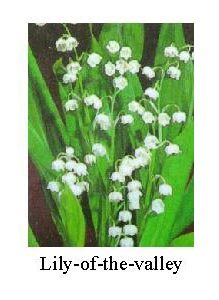
Lily-of-the-Valley, Convallaria majalis,
all parts;
Lobelia (some species), all parts;
Lupinus (some species), seeds;
Monkshood, Aconitum napellus,
all parts;
Morning Glory, Ipomoea violacea,
seeds;
Mushrooms (many are poisonous, some are deadly. Avoid eating any
mushrooms unless they are positively identified as being non- toxic.);
Narcissus (some species), bulb;
Oak, Quercus (some
species), acorn, young plant;
Potato, Solanum tuberosum,
green seed balls, green tubers;
Privet, Ligustrum vulgare,
all parts;
* Rhubarb, Rheum rhaponticum,
leaves (stems non-toxic);
Sedum (some species), all parts;
Snow-on-the-Mountain, Euphorbia marginata,
sap;
Spindle Tree, Euonymus (some
species), leaves, fruit, bark;
Sweet Pea, Lathyrus odoratus,
seeds;
Tansy,
Tanacetum vulgare,
all parts;
Tulip, Tulipa (some
species), bulb;
Virginia Creeper, Parthenocissus
quinquefolia, berries;
* Yew, Taxus (some
species), seeds (fleshy red pulp not as toxic).
In addition to these plants, there are many native plants that are considered poisonous. Some native plants are very toxic and if eaten are often fatal. There are many plant books available which identify and describe native plants. Consult a reference book before eating any native berries or nuts, before eating any roots and before making tea from any leaves. Recommended reference books include: Poisonous Plants by Frantisek Story, published by Hamlyn; A Field Guide to Poisonous Plants and Mushrooms of North America by Charles Kingsley Levy and Richard B. Primack, published by the Stephen Greene Press; and Poisonous Plants of the United States and Canada, by John M. Kingsbury, published by Prentice Hall.
Visitors
Count is per person no matter how many pages are visited!
Hits
Count is for ALL the hits each visitor makes!

prom dresses 2007 + size